
Deck safety guide
Deck safety check: what to look at every spring
Spring is a good time to look your deck over. The snow is gone, plants haven’t grown in around it yet, and the deck season hasn’t started. The North American Deck and Railing Association (NADRA) promotes May as Deck Safety Month. Its consumer checklist is the backbone of this page. We added numbers for footings, railings and stairs from Michigan’s residential code and the American Wood Council’s deck guide.
This is a walk-around for homeowners. It doesn’t make a deck code compliant, and NADRA says the same about its own checklist. If something looks wrong, have a deck builder or home inspector look at it.
Call Tanner: 734-259-4649Request an estimate
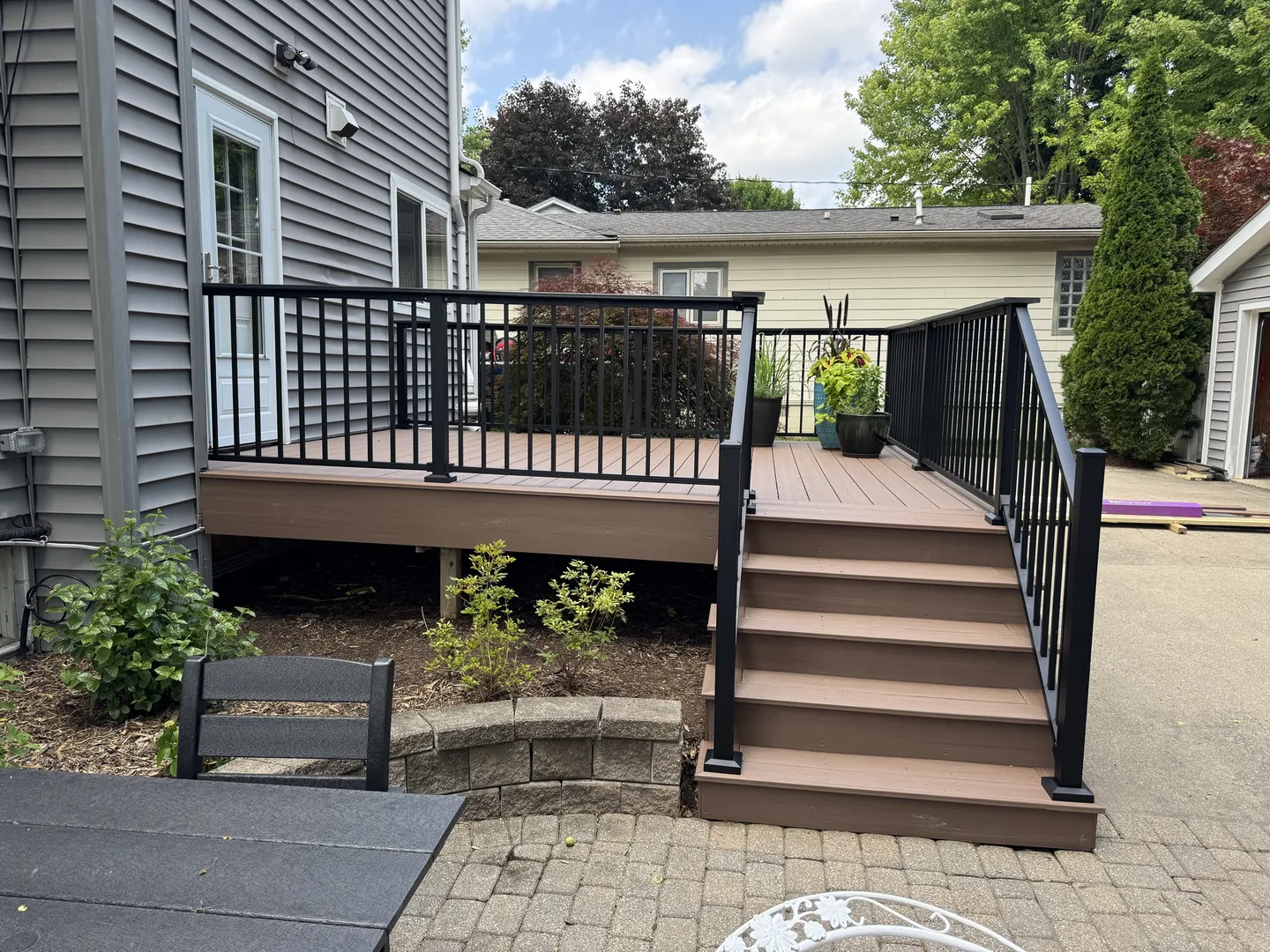
The short checklist
- Under the deck: soft wood, small holes, rust and loose fasteners.
- Where the deck meets the house: flashing and water.
- Posts and footings: anything that moved over the winter.
- Railings: push on them. They shouldn’t move.
- Railing height and gaps.
- Stairs: stringers, treads, risers and the handrail.
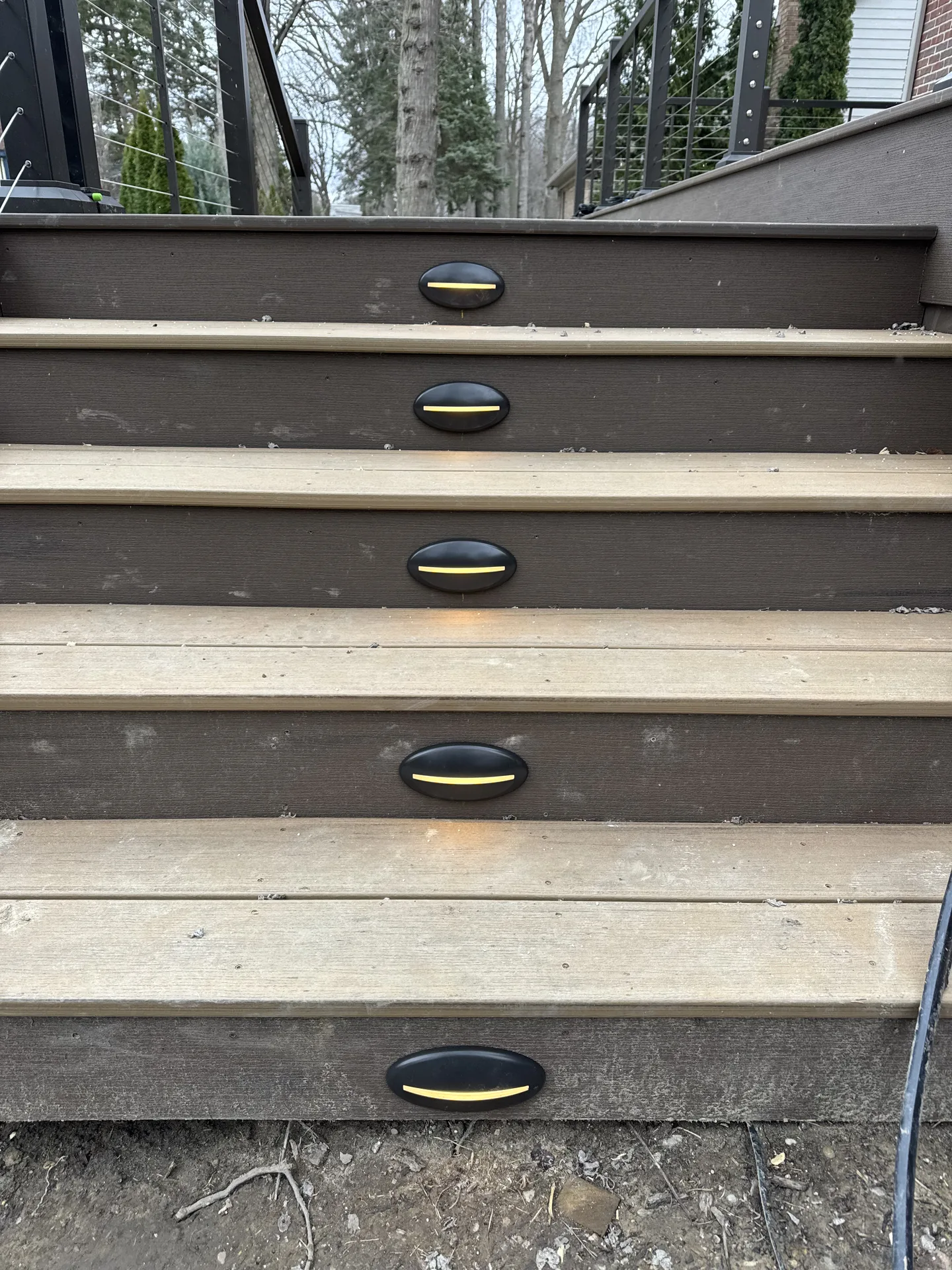
- Lights at the stairs.
- Outlets and cords.
- Leaves, debris, mildew and worn coating.
- Grill and fire pit spacing.
- Furniture, swings and anything heavy.
- Trees over the deck.
Each item is explained below, with its source.
1. Start underneath: the frame
Most of what holds a deck up is under it. NADRA’s checklist starts there: the ledger board where the deck attaches to the house, the support posts and the joists. NADRA calls the ledger “a common source of deck failure.”
- Probe the wood. Push an ice pick or screwdriver into damp spots and the wood around fasteners. If it goes in easily, feels soft or spongy, or a sliver breaks off without splintering, NADRA says decay may be present.
- Look for small holes. NADRA says they may point to insects.
- Check the fasteners. Tighten loose ones and look for rust. NADRA says a corroded fastener can damage the wood around it, and that the ledger shouldn’t be held on with nails only.
- Look for sag and sway. The deck and stairs should look even and shouldn’t sway or move when tested.
Our deck replacement guide has the full list of frame warning signs, including ledger attachments the American Wood Council’s deck guide (DCA 6) doesn’t allow: How do I know if my deck frame needs replacing?
2. Where the deck meets the house
Flashing is the metal or plastic strip that sends water away from the joint between the deck and the house. Look for flashing that is loose, missing or letting water collect. NADRA suggests adding or replacing it where water is collecting. DCA 6 calls for corrosion-resistant flashing at the ledger.
Water stains or soft wood along the house wall under the deck are worth a closer look.
3. Posts and footings after a Michigan winter
Frost is the reason footings go deep. Michigan’s residential code says exterior footings must extend 42 inches below grade. The building official can change that based on conditions like freezing temperatures, soil type or ground water (R 408.30522). Older decks sometimes sit on shallow footings or on blocks on the ground.
In spring, look for:
- Posts that lean, or that have shifted on their footings since last fall.
- A deck surface that is no longer even.
- Stairs that rest on a patio or a concrete pad at the bottom. DCA 6 says stair stringers shouldn’t bear on pads or patios that aren’t founded at least 12 inches deep or below the frost line, whichever is deeper. Its stair posts sit on footings at that depth.
4. Railings: push on them
Push on each railing post and section. NADRA says railings should be secure, and that matters more the higher the deck is off the ground.
The numbers in the American Wood Council’s deck guide (DCA 6):
- A guard (the railing at an open edge) is required on decks more than 30 inches above grade.
- The guard is at least 36 inches high.
- Openings shouldn’t let a 4-inch ball pass through.
- If a built-in bench sits next to the guard, DCA 6 measures the guard height from the seat, not the deck. Openings under a bench used in place of a guard follow the same 4-inch rule.
Your city or township has the final say for your property.
5. Stairs and handrails
NADRA’s stair checks:
- The stringers and risers should be securely attached and not decayed.
- If the stairs have open risers, the opening behind each tread should be no more than 4 inches high.
- Keep the stair path clear of planters, decor, toys and other things people can trip on.
The numbers to measure:
- Handrail: stairs with 4 or more risers need a handrail on at least one side, 34 to 38 inches above the stair nosing. (DCA 6)
- Risers: 8¼ inches tall at most. The tallest and shortest riser in a flight can’t differ by more than ⅜ inch. (R 408.30519)
- Treads: at least 9 inches deep, with the same ⅜-inch limit. (R 408.30519)
If the bottom of the stairs has settled, the first riser may no longer match the others. Measure it.
More on planning stairs and railings: Deck stairs and railings: plan the route before the look
6. Lighting and electrical
NADRA suggests:
- Check that every light works. Clean the covers and trim plants or branches that block the light.
- Make sure outlets, appliances and other electrical features are in good condition and up to code, and childproof if children use the deck.
- Keep electrical cords out of walkways so nobody trips.
DCA 6 also points to a residential code rule for stairs: a light at the top landing that lights all the stairs and landings. The switch is inside the house, or the light runs on a motion sensor or timer.
Have an electrician look at any outlet, fixture or wiring that seems damaged.
7. Clean the surface
NADRA says to clear away leaves and debris, since they can be slippery and promote mildew. If mildew is present or the coating has worn away, clean the deck and apply a new waterproofing coating. NADRA says this can help prevent split and decayed wood and loose fasteners.
Composite decking has its own care steps. See our deck material and maintenance guide and wood and composite deck care.
8. Grills, fire pits and heaters
- NADRA: keep any source of fire or heat away from surfaces that can burn, or protect the deck with a non-flammable pad. Follow the manufacturer’s directions.
- U.S. Fire Administration: place a grill at least 3 feet from siding, deck railings, eaves and overhanging branches. Use fire pits, chimneys and outdoor fireplaces at least 10 feet from your home or anything that can burn. Don’t store or use a grill on a porch or balcony.
- NADRA: store lighter fluid, matches and deck cleaners where children can’t reach them.
Ask your local fire department if you’re unsure what’s allowed where you live.
9. Furniture, swings and heavy loads
- Test the furniture. NADRA says to check that outdoor furniture is sturdy and to avoid placing seating right at the edge of the deck.
- Check swings and hammocks. Test the chains and ropes.
- Storage boxes and benches. NADRA suggests childproof latches.
- Thinking about a hot tub? DCA 6 says decks that carry large concentrated loads, such as hot tubs, are outside the scope of its standard details. Talk to your building department before adding one.
10. Trees over the deck
If trees hang over the deck, NADRA says to make sure no decaying limbs could break off and fall.
What to do with what you find
- Keep people off anything that moves, sags or feels soft until it’s been looked at.
- Small fixes: NADRA suggests tightening loose fasteners and setting nails that have popped up. A ledger needs more than nails.
- Repairs can need a permit. Canton lists replacing deck boards, guardrails, steps or structure as work that needs a building permit. Plymouth Township needs a permit to install or repair a deck. Northville Township says non-structural deck repair doesn’t need one. Compare the rules: deck permits by town.
- For a full evaluation, NADRA recommends a deck builder or a home inspector.
We take on deck repairs, rebuilds and new decks. Tell us what you found, like a soft board, a loose railing or a step that moved, and we’ll talk through the options.
Deck safety questions
When is Deck Safety Month?
May. NADRA promotes May as Deck Safety Month and publishes a consumer checklist. A spring check lines up with it: the snow is gone and the deck season is about to start.
How often should I check my deck?
At least once a year. NADRA’s deck safety program promotes annual inspections. In Michigan, spring works well because winter is over and the deck hasn’t been in heavy use yet.
Does a low deck need a railing?
DCA 6 requires a guard on decks more than 30 inches above grade. A lower deck may not need one. Check with your building department for your property.
If my deck passes this checklist, is it up to code?
No. NADRA says checking a deck with its checklist doesn’t make it code compliant. The checklist helps homeowners spot problems. For a full evaluation, NADRA recommends a deck builder or a home inspector.
Do I need a permit to fix what I find?
It depends on the town and the repair. Canton requires a building permit even to replace deck boards, guardrails or steps. Northville Township says non-structural deck repair doesn’t need one. Our deck permits by town page compares 11 local towns.
Can I send photos before a visit?
Yes. Text them to 734-259-4649 with your name. A wide shot from the yard, a shot of where the deck meets the house, and a few close-ups from underneath help most. Photos help us prepare, but they can’t show everything under a deck.
Keep reading
Found something on your deck you’re not sure about? Call or text Tanner at 734-259-4649, or send the estimate form. Tell us your city or township and what you noticed. Email: [email protected].
Request an estimate734-259-4649